SEN-i – Special Education Needs Initiative


The Special Education Needs Initiative in Pakistan (SEN-i Pakistan) is the outcome of decades of experience with special needs in the UK. The Initiative is funded by the corporate foundation, CareTech Foundation, and supported by the Children of Sheikh Abdul Rashid and Fahmida (COSARAF) Foundation, in Karachi.
Through its extensive work with mental health in Pakistan alongside the British Asian Trust, the Foundation observed critical gaps. A lack of public funding, infrastructure, and expertise has left Pakistan’s education system in urgent need of intervention to support 2-17 year-olds with SEND requirements. Children with SEND require resources that will enable them to develop similar to their non-SEND peers. Parents and caregivers of SEND children also require support and education.
During the past year, PSEI has worked tirelessly with some of the best schools in Pakistan, including Crescent Model School in Lahore and Dawood Public School in Karachi, amongst others. With the pilot programme beginning in January 2024, and with the continuous support of all our partner schools, we have accomplished major milestones on the delivery side of the programme. These include:
• A locally adapted Initial Assessment Tool, ready for schools to screen students for additional needs. This tool is approved and tested by the CareTech Ltd’s Cambian Schools in the UK seed-funding.
• A mutually developed curriculum framework compliant with Key Stages 1-4 to assist students with additional needs.
• A dedicated online Learning Management System is in place with a suite of 100+ courses, approved by the National Association for Special Educational Needs (Nasen) which can be accessed asynchronously by teachers from across Pakistan.
From 14th–25th July, SEN-i delivered a pioneering training programme on Special Educational Needs (SEN), reaching educators across Rawalpindi, Lahore, and Karachi. This initiative marks a significant stride toward inclusive education in Pakistan, equipping teachers with the skills and strategies to support learners with special needs in mainstream classrooms.
The first training session, held in Rawalpindi, was tailored for a SEN-i partner school, laying vital groundwork for inclusion in rural Punjab. In Lahore, Crescent Model Higher Secondary School hosted the second session, welcoming educators from The Noor Project, First Steps School (Faisalabad), and CMHSS. The final session took place at Dawood Public School in Karachi, in collaboration with the Fahmida Begum Foundation and NOWPDP, fostering dialogue and shared learning across sectors.
These sessions were delivered through a research-backed, contextualised framework specifically designed for Pakistan’s education system. Developed in collaboration with CareTech Ltd’s Learning Management System, Myrus, the course used real case studies and adaptable strategies relevant to a diverse range of school settings- from rural, low-cost schools to high-fee private institutions and non-profits.
The training reached approximately 75 Early Years teachers, collectively impacting around 16,000 pupils!
Modules covered:
Underpinnings of Inclusive Education
Collaborating with Parents and Caregivers: supporting the family around the child.
Understanding Disability in the Classroom:
Physical and Sensory Needs: Developmental Coordination Disorder
Speech, Language and Communication Needs: Autism
Cognitive Needs: Dyscalculia
A variety of methodologies- including immersive experiences, case studies, and reflection points- ensured a practical and engaging learning environment. Participants praised the training as insightful and thought-provoking, particularly valuing the opportunities for reflection on their own teaching approaches and philosophies.
The strong positive feedback highlights a growing demand for further advanced training and ongoing professional development in SEN across Pakistan. We are so pleased to be able to provide an answer to this demand!
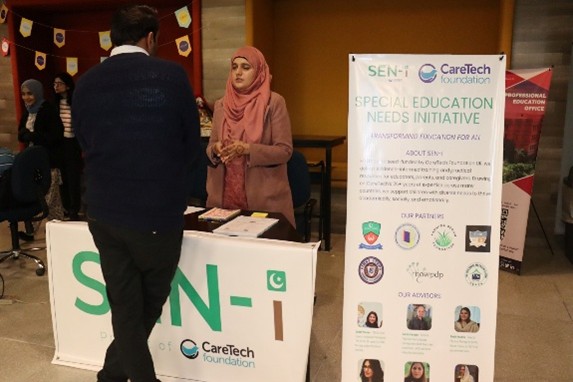
SEN-i was proudly represented at the LUMS School of Education Open Day, strengthening its presence within one of Pakistan’s most influential academic spaces and spotlighting its roots in applied, impact-driven leadership through SOE alumna Mariam Durrani. The event was attended by Aymen Imtiaz, our recently hired Research Associate. The engagement generated strong interest from prospective educators and practising teachers around inclusive classroom practices, teacher training, and school partnerships, with unsolicited positive feedback reinforcing SEN-i’s credibility and relevance. The event enhanced brand visibility, opened pathways for future recruitment and collaboration, and affirmed SEN-i’s positioning as a trusted bridge between rigorous academic grounding and real-world inclusive education impact. These insights may inform future programme development and advocacy priorities.
On an invitation extended by the British Asian Trust to represent SEN-i at a webinar on ‘Neurodivergent Children in Everyday Spaces’, Mariam attended on behalf of SEN-i. The programme was introduced to all participants at the beginning of the webinar. A key takeaway was the need for professional training to build capacity not only around neurodivergence but also mental health issues among neurodivergent children, parents, and teachers. Nearly all panellists agreed that psychologists, psychiatrists, and educational practitioners often work in silos and lack a child-centric approach.
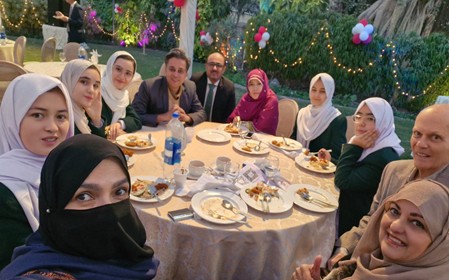
Mr and Mrs Idris Sheikh recently hosted a gracious lunch and hi-tea at their residence in Bahria Town, Karachi. The gathering was attended by all staff members from the Fahmida Begum Foundation. A leading official from UNDP also joined the gathering and expressed keen interest in the work of SEN-i in mainstream schools.
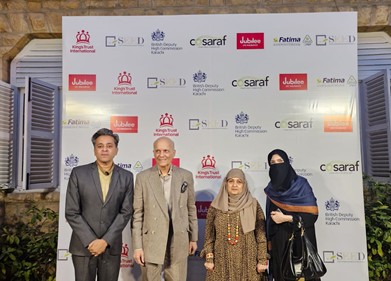
The ECP Challenge, co-hosted by King’s Trust International and Seed Ventures at the British Deputy High Commission in Karachi, brought together emerging changemakers from across Pakistan in a powerful celebration of innovation and inclusion. The event was attended by Lance Domm, British Deputy High Commissioner; Ms Jane Marriott CMG OBE; and Zahid Ali Abbasi, Secretary of the Sindh Education & Literacy Department. Marking a proud moment for regional talent, the Hyderabad team emerged as winners, while all five finalist teams hailed from smaller cities, including Gilgit-Baltistan, Peshawar, Quetta, and Hyderabad—underscoring the depth of talent beyond major urban centres and the growing impact of grassroots leadership.